Your First NHL Game: Hockey Seats, Warm Layers and Arena Planning
Prepare a first ice hockey visit by choosing a useful rink view, arranging mobile entry and planning for an arena environment that can differ from the weather outside. This is an independent planning guide, not a ticket seller or an official event announcement. Use it to prepare questions, compare the practical options and build a day that fits your group. The examples are invented planning scenarios rather than promises about a particular venue, team, price or date.
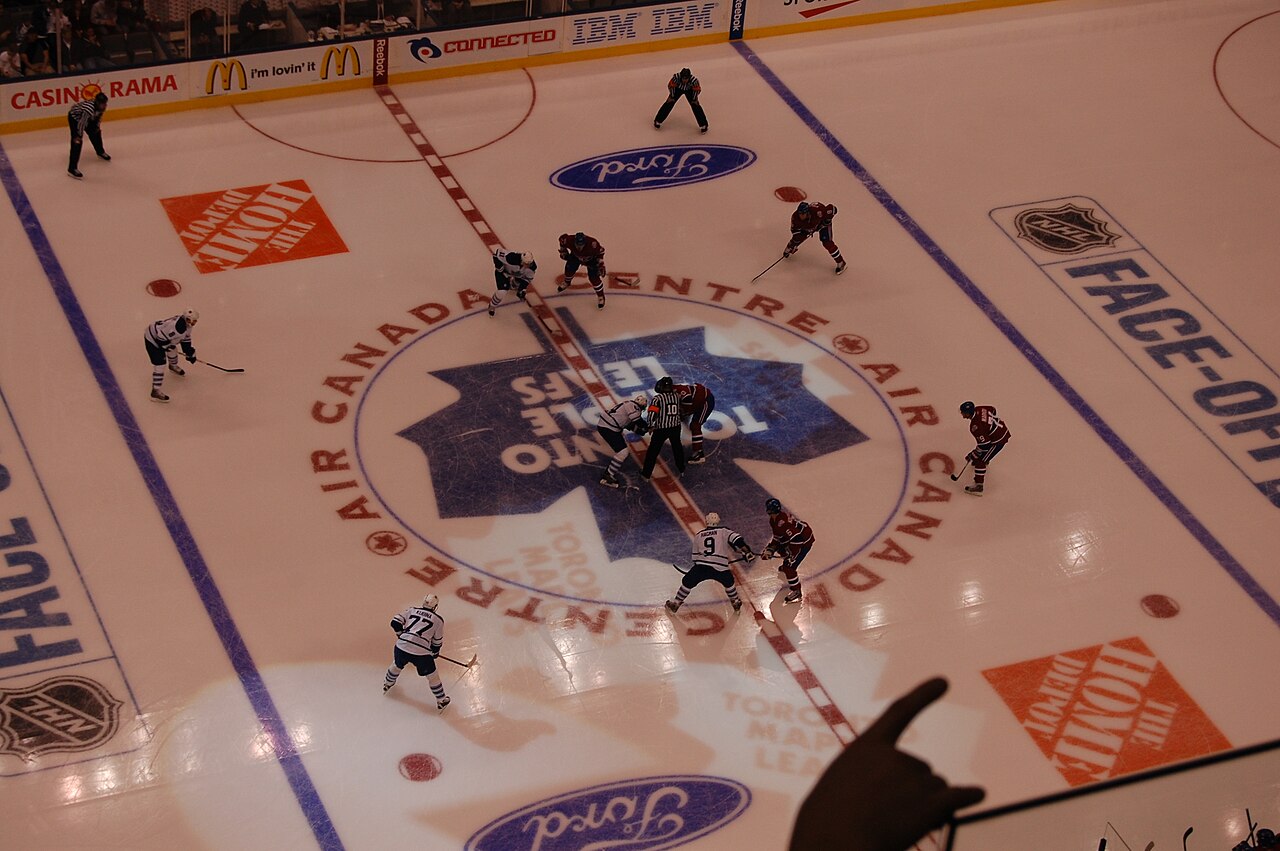
Photo: · CC BY 3.0. Reference photograph: NHL faceoff.jpg. It does not establish current access, weather, operations or a future event. Display may crop the original.

Identify the building and game
Check the home club's official schedule and compare it with the ticket. Confirm the arena name rather than assuming a team always plays at the building you remember. Note whether your purchase is for the actual game, a package or another event. Save the seller and order details in a separate record.
Choose between whole-rink and close-up views
A higher central position may help you follow the full rink, while lower positions bring the physical pace closer. Check how glass, rails and nearby spectators affect the actual seat view. Behind a goal, some action will be far away. Choose the tradeoff deliberately instead of treating row number as a quality score.
Take a removable layer
Your comfort depends on the arena, your location and your own preferences. Carry a permitted light layer rather than packing as though every spectator sits outdoors in winter. Consider the contrast between the trip to the venue and time inside. If a specific temperature or seating need matters, ask the venue directly.
Know the basic rhythm of hockey
Use the scoreboard to follow the period, score and penalties. Learn to recognize a stoppage before worrying about every technical rule. The puck moves quickly, so a broad view of play can be easier than trying to watch it exclusively through your phone. A companion can explain the last decision during the next pause.
Follow aisle and glass instructions
Wait for the usher's signal when returning to your seat rather than moving through a row during active play. Do not lean over barriers, tap on equipment or obstruct other viewers. Pay attention to arena warnings about objects entering spectator areas. Ask a staff member where you can stand or photograph without blocking circulation.
Use the arena's current entry guide
Check bags, cameras, food and necessary personal items against that venue's rules for the game. An arena's guide can include entrances, mobile entry and guest services; these are worth locating before travel. Do not transfer a policy from a different hockey arena or from a concert held in the same building.
Plan a manageable first visit
Decide whether warmups, the full game or simply a comfortable introduction is your main goal. Ask when gates open and whether your ticket permits the activity you want. If your group includes a tired child or a noise-sensitive visitor, agree on a break and an early departure option without treating either as a failure.
Use the last period to check the return plan
Without distracting from play, confirm that your agreed route is still practical. Keep your ticket available until you have left and know where the group will meet if separated by a crowd. A crowded arena exit adds time, and an uncertain finish should not be tied to an inflexible last-minute connection.
A worked plan you can adapt
Two friends are trying hockey for the first time and care more about understanding the game than sitting beside a player. They compare a higher central section with a lower corner section, then choose the option that makes the full rink readable within their budget. They pack a light extra layer, save the correct arena entrance and set a meeting point that does not block a corridor. During play, one watches the overall movement while the other follows the scoreboard, and they compare what they noticed at a stoppage. Their return plan includes time for the crowd to clear and an alternative route if the preferred train is no longer practical. None of these choices depends on a fabricated ticket price or a prediction that the game will finish at an exact minute.
Your working checklist
Checkmarks stay in this browser when storage is available. They do not submit information or complete a purchase.
Put it into practice
- Match your ticket to the official club schedule, arena and date, then record the admission account and support contact.
- Compare views across two different seating elevations and check the exact section for rails, glass and restricted-view notes.
- Read the arena's event-day instructions and settle any bag, camera, medical-item or access question before packing.
- Choose removable clothing layers and permitted essentials that work both outside and in the arena.
- Reach the proper entrance with enough margin to locate guest services, your seats and the nearest useful facilities.
- Follow the scoreboard and ushers, using stoppages for questions or movements through the row rather than obstructing active play.
- Depart through the directed exits and follow the return route the group saved, updating companions if crowding changes it.
Before you finish
- The event, session, date and venue match across the ticket and travel plan.
- The venue has answered any item, access or seating question that could prevent attendance.
- Each person knows the entry plan, meeting point and journey home.
- The total spend and cancellation assumptions have been checked before further purchases.
Common questions
Will I need a heavy winter coat inside?
Not necessarily. Comfort varies by building, seat and person. A removable permitted layer gives you options; ask the venue if a temperature-related need is important.
Are seats beside the glass best for a first game?
They offer proximity, but compare their view with a higher whole-rink perspective. Glass, angles and distance to the far end can change how easily you follow play.
Can I get up whenever I want?
Follow the ushers' instructions and wait for an appropriate stoppage when returning through a row. Emergencies are different; ask staff for assistance if you need immediate help.
Does the same arena use identical rules for hockey and concerts?
Do not assume so. The event configuration and admission instructions may differ. Read the information for the game you are actually attending.